PERSONAL EXPERIENCE
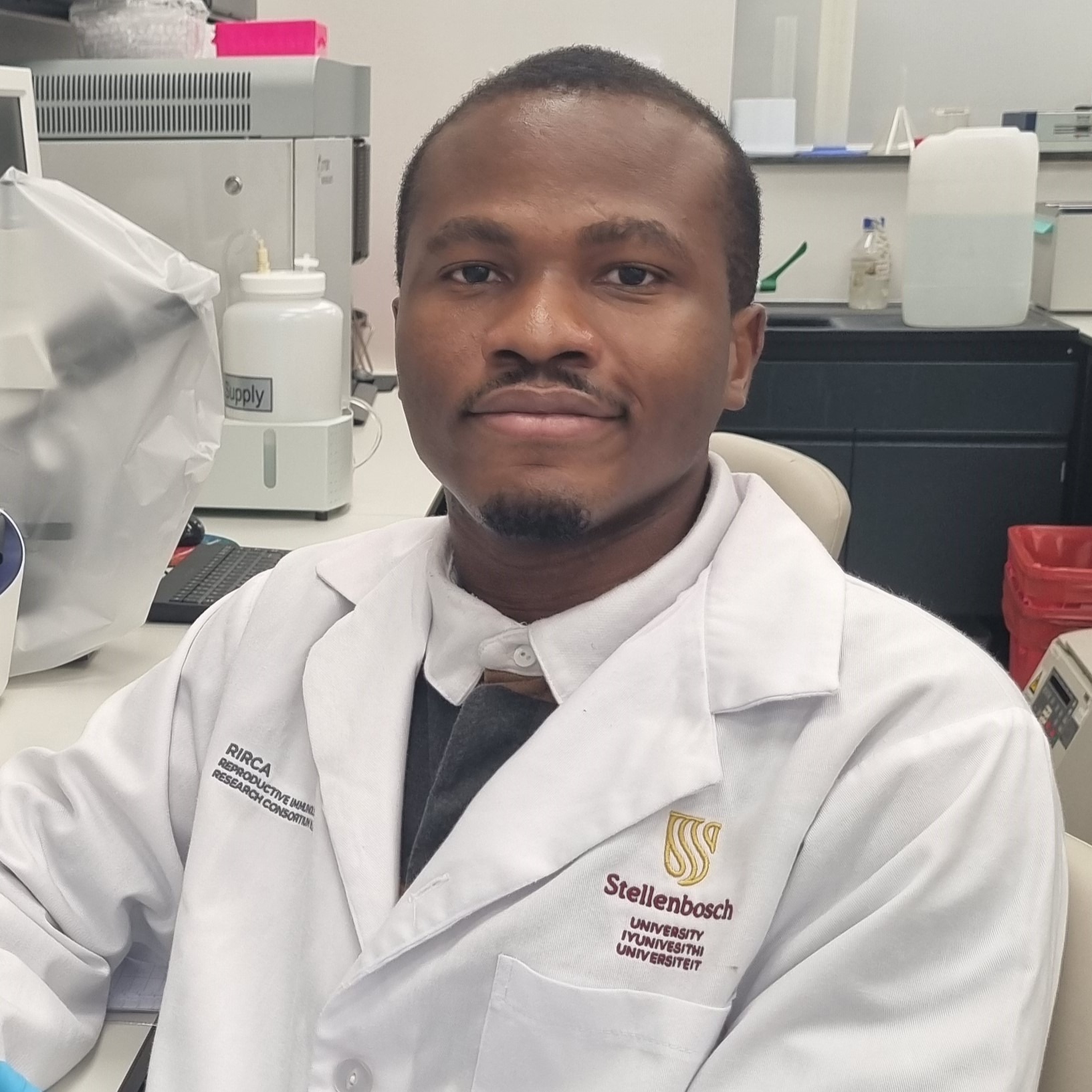
Olayinka Asafa is a PhD candidate from Nigeria, studying at RIRCA through the BRAINS Scholarship.
He’s fascinated by one simple question: how does a mother’s immune system give a baby the best possible start in life? Breast milk is more than nutrition. It’s a living biological system, packed with antibodies, immune cells, and protective molecules that help shape a baby’s immune system during the most vulnerable stage of life.
Those antibodies and immune factors help protect newborns while their own immune system is still learning. His research asks an important question: how do we preserve all of those benefits while ensuring breast milk remains safe? Olayinka studies how pathogens such as CMV and HIV, along with factors like processing, can affect breast milk and how its safety can be optimised without compromising the biological quality that makes it so valuable.
Ultimately, his work is about giving every newborn the healthiest possible start.
Olayinka has been awarded the 2026 African STARS Fellow in the Young Professional Programme at CERI – Centre for Epidemic Response and Innovation, Stellenbosch University in partnership with the Mastercard Foundation.
INTERVIEWS
INTRODUCTION
“The first vaccine a baby receives isn’t from a syringe. It’s from their mother.”
That’s where Olayinka Asafa starts when he describes his work. Olayinka is a PhD candidate at RIRCA, Stellenbosch University, on the prestigious BRAINS scholarship.
His research treats breast milk as a living biological system: the antibodies, immune cells and protective molecules that defend a newborn while its own immune system is still learning. The question driving his research: how do we preserve all of those benefits while keeping breast milk safe?
🎬Watch him explain it in our Meet the Team interview ahead of WorldBreastfeedingWeek in August.
YOUR CURRENT PROJECT
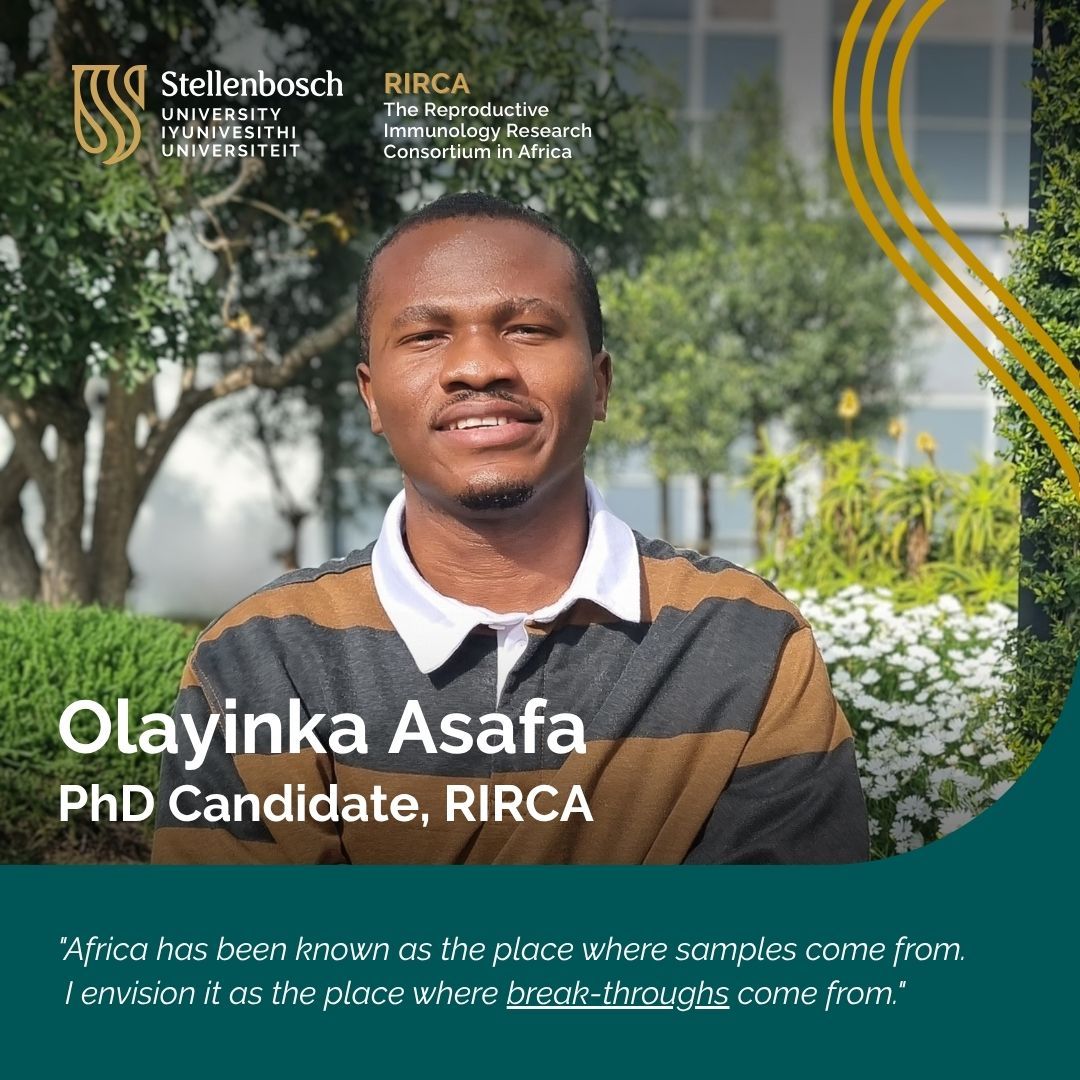
“Africa has been known as the place where samples come from. I envision Africa as the place where breakthroughs come from. We shouldn’t just contribute to global science, we should help lead it.”
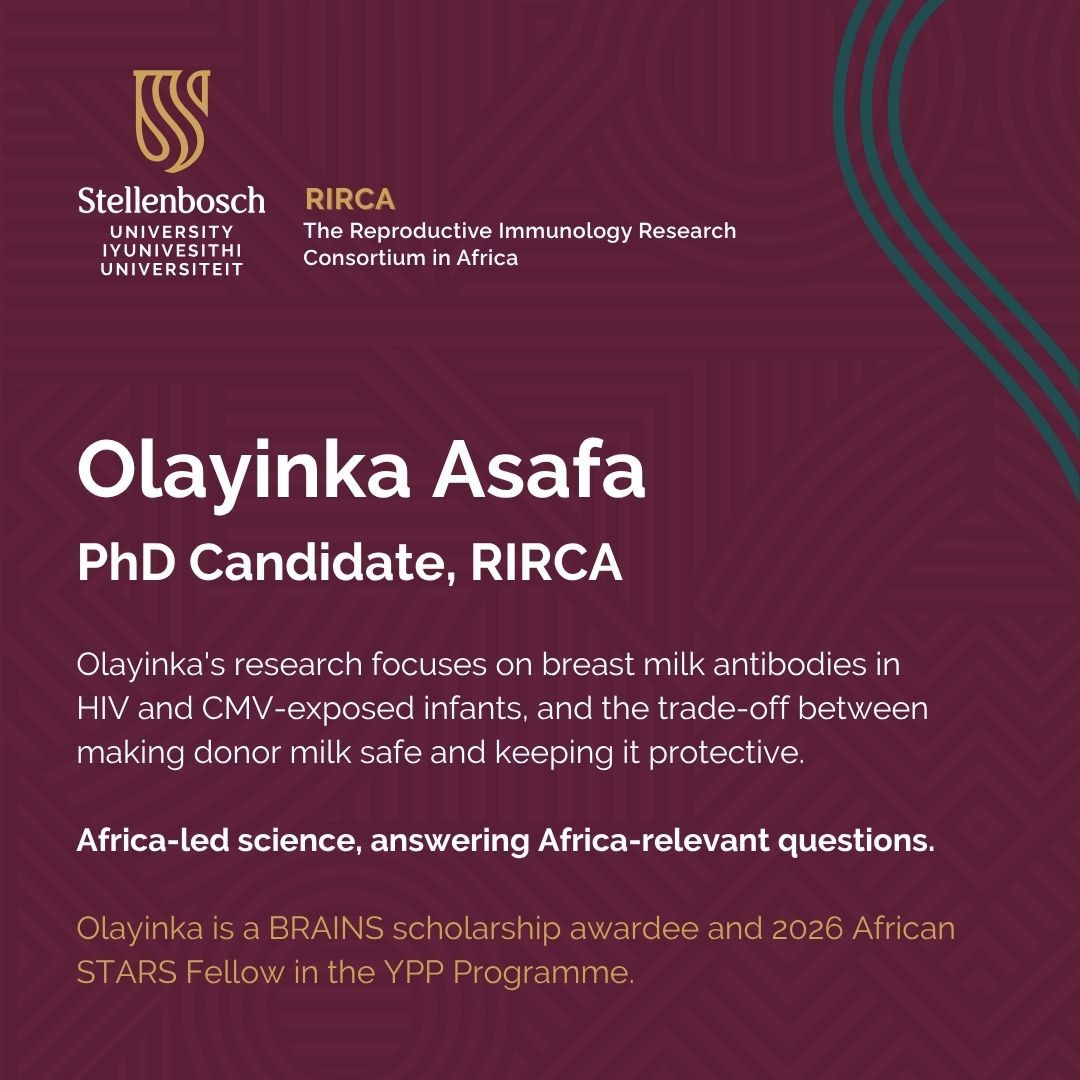
Meet RIRCA’s Olayinka Asafa. His research looks at breast milk antibodies in infants exposed to HIV and CMV; specifically, how well protection passes from mother to baby, and what’s preserved or lost when donor milk is pasteurised for safety.
This is exactly the kind of research he’s describing. Africa-led and answering the questions that matter on the continent. 🌍
Olayinka is already putting that into practice too, as a BRAINS scholarship awardee and 2026 African STARS Fellow.
What would it take for Africa to fully lead in global science? Give us your thoughts!👇
BEHIND THE SCENES
Thirty seconds with Olayinka Asafa on the shift he wants to see in science, and why African scientists answering African challenges matters.
🎥 What’s one change that would help Africa lead breakthroughs? 👇
FUTURE PLANS
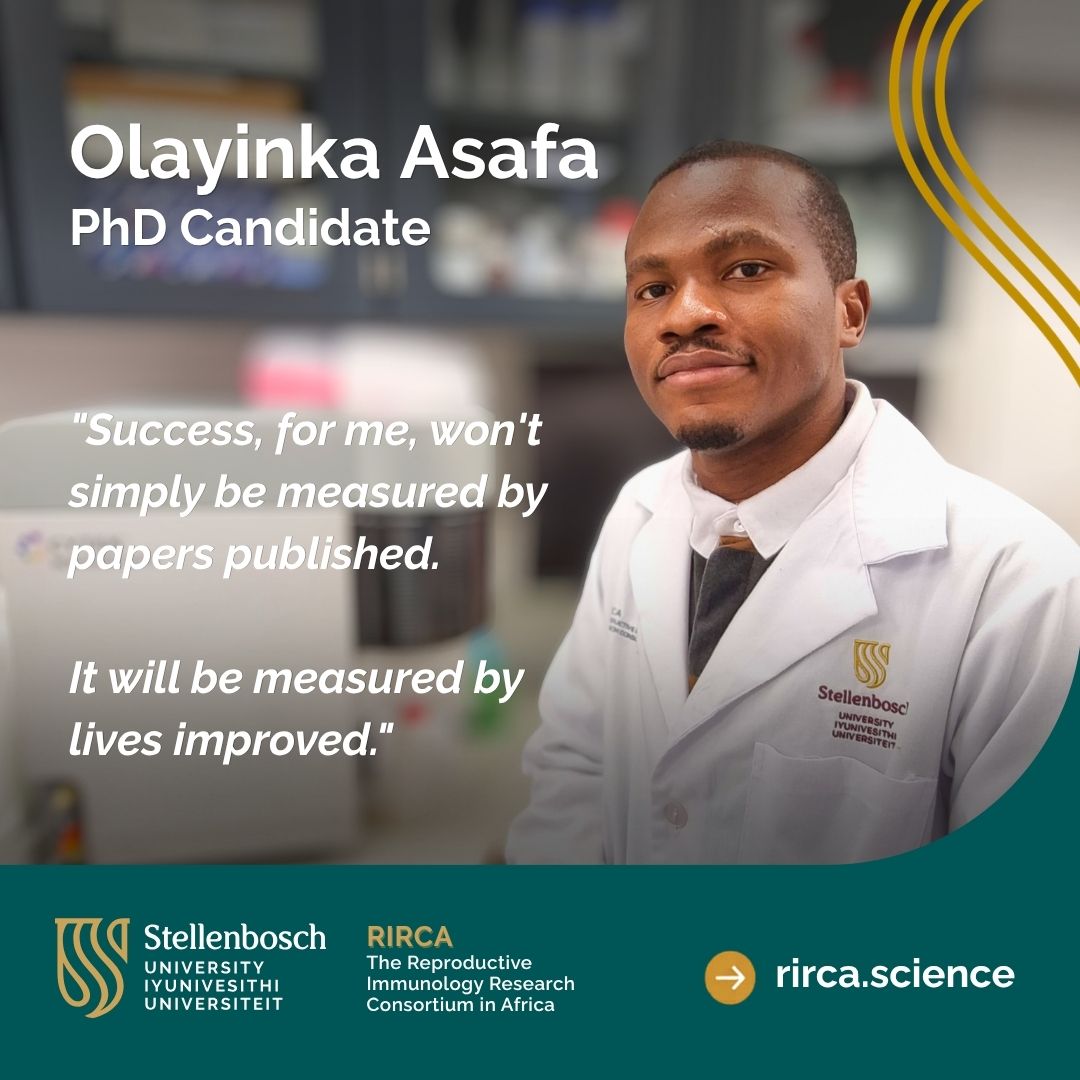
“Success, for me, won’t simply be measured by papers published. It willl be measured by lives improved.”
Tomorrow Olayinka Asafa leaves RIRCA and the BRAINS Programme to begin the 2026 African STARS Fellowship at CERI – Centre for Epidemic Response and Innovation.
💬 “I came to RIRCA because of the science, but the people made it worth the while.”
During his time with RIRCA, Olayinka learned advanced laboratory techniques, sharpened his computational skills, presented his work internationally, and learned to think beyond the experiment in front of him.
But the lesson he says matters most is a bigger question he’s carrying forward: “How can this discovery improve lives?”
Olayinka hopes to lead a research programme in Africa, mentor the next generation and help build a continent-wide network that turns lab discoveries into solutions African communities can use.
RIRCA has been fortunate to have him, and we’re excited to see where his research takes him next.
Congratulations, Olayinka! Wish him well below. 👇